Treating stained marble at the Haram
I originated the idea and wrote the study on how to remove stains from the marble flooring of Al Masjid Al Haram, in collaboration with Dab Flow Nanotechnology - Germany.
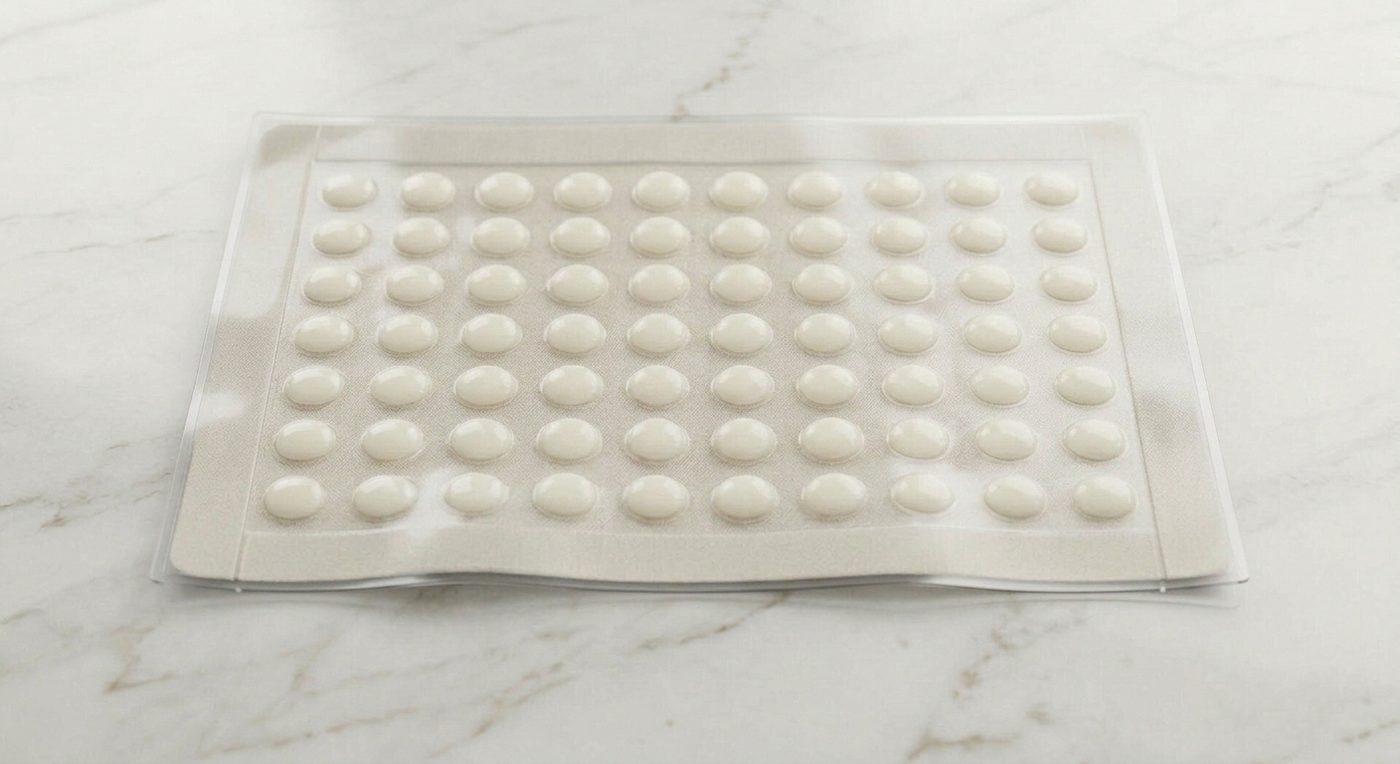 Treatment sheet, concept render
The stone
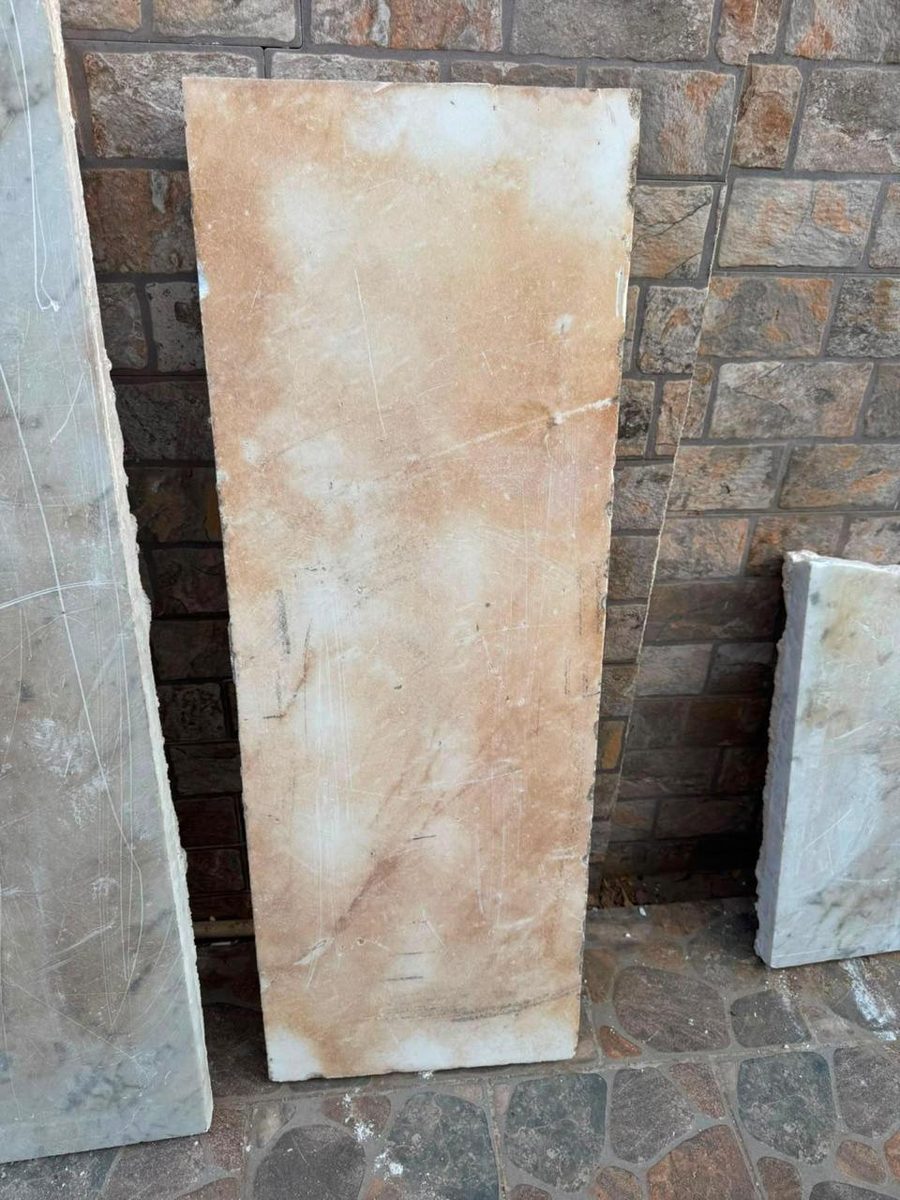 A stained slab
Stains that ordinary cleaning does not remove.
What I think is happening
Tasos marble contains small inclusions of iron sulfide (pyrite). When water and oxygen reach them, they oxidise and leave rust-coloured marks in the stone.
What makes it worse
The desalinated water used for washing is likely to speed this up. It is unbuffered and mildly aggressive, so it widens the pores of the marble and lets oxygen travel deeper. This is my working explanation, built from published research on pyrite weathering in heritage stone and on the water quality data of the site.
Why it is hard to fix
The floor cannot be closed for long, so any treatment has to work around constant use by pilgrims.
The treatment, over time
The covering does not survive the crowd. Pilgrims walk on the sheet that keeps air out and tear it, and every tear stops the reaction.
The result on a sample
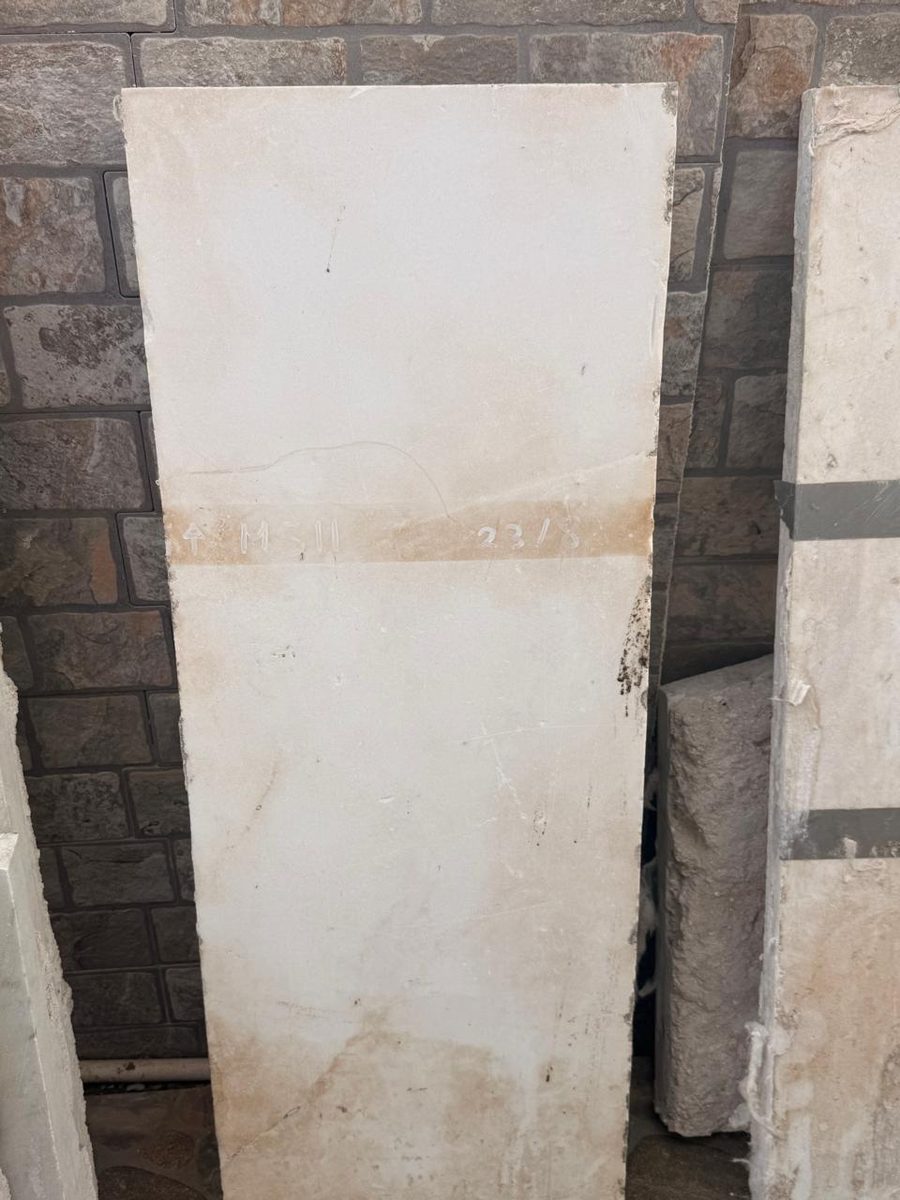 Sample MS11, after treatment
The slab comes out mostly clean and white.
The surface is largely even and white across most of the face, with no strong orange or brown staining like the stained slab above.
A light yellow tint remains along the lower edge, and a faint band shows near the marking on the slab.
The report records this sample, MS11, with its method and photos.
Confidential: the products, quantities and full measurements are deliberately withheld from this page to protect the project and the know-how behind it.
The sheet I am developing
Placed once, pressed down, and it keeps working underfoot.
A loose cover over the stone. Foot traffic tears it and the reaction stops.
A ready-made sheet pressed on in one step. People can walk over it while it works.
Designed around the site: foot traffic, short access windows, and work that is quick and repeatable for installers. The design is in development and technical details are shared under NDA.
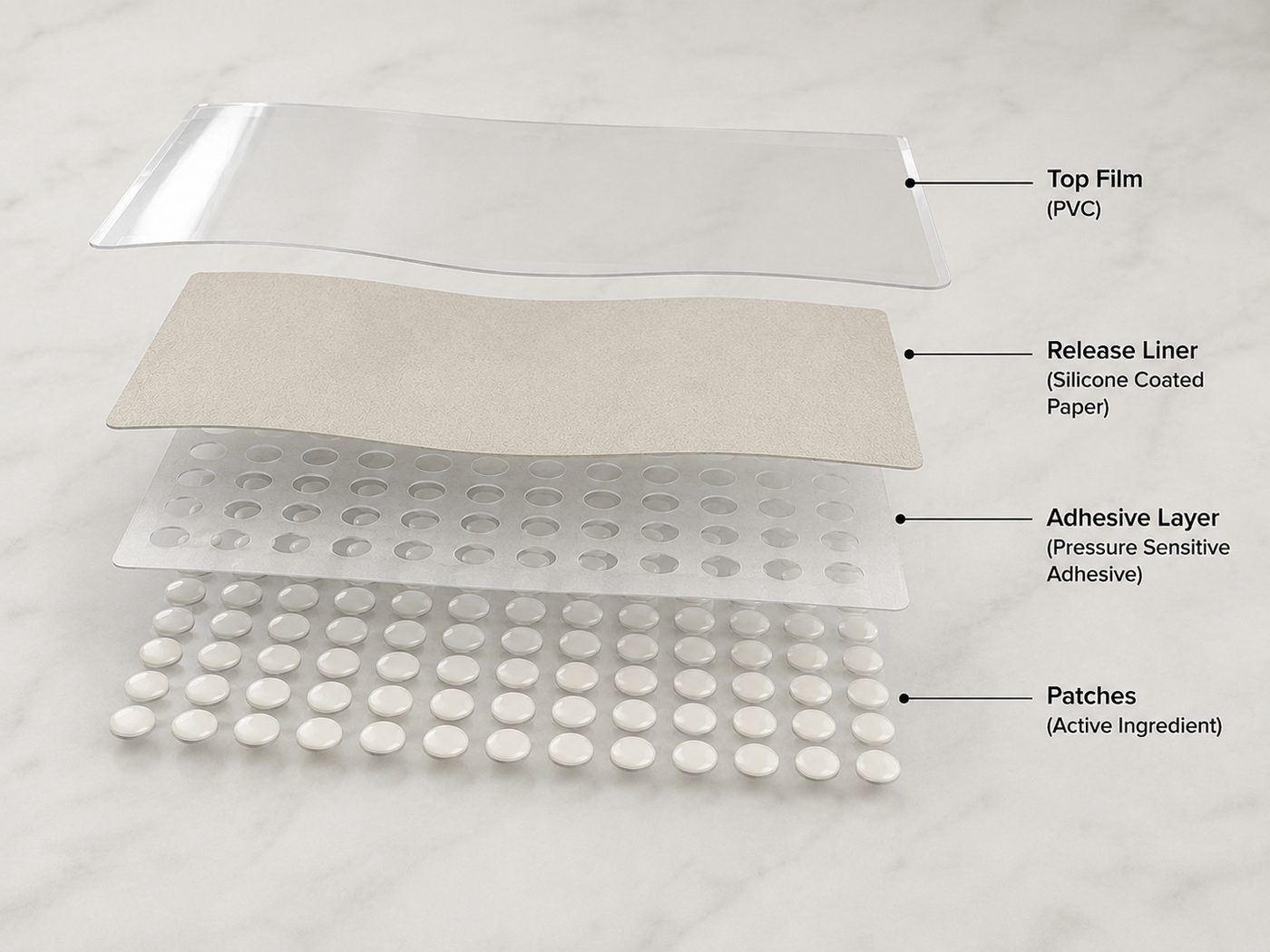 Early concept. The design has changed since.
The report
- Problem statement and site conditions.
- Materials and method used in the treatment.
- Likely cause of the staining, with published sources.
- Recommendations for maintenance on a floor in constant use.
- Proposed product improvements for Hajj and Umrah traffic.
- Written in Arabic, with an English translation.
The full report is available on request.